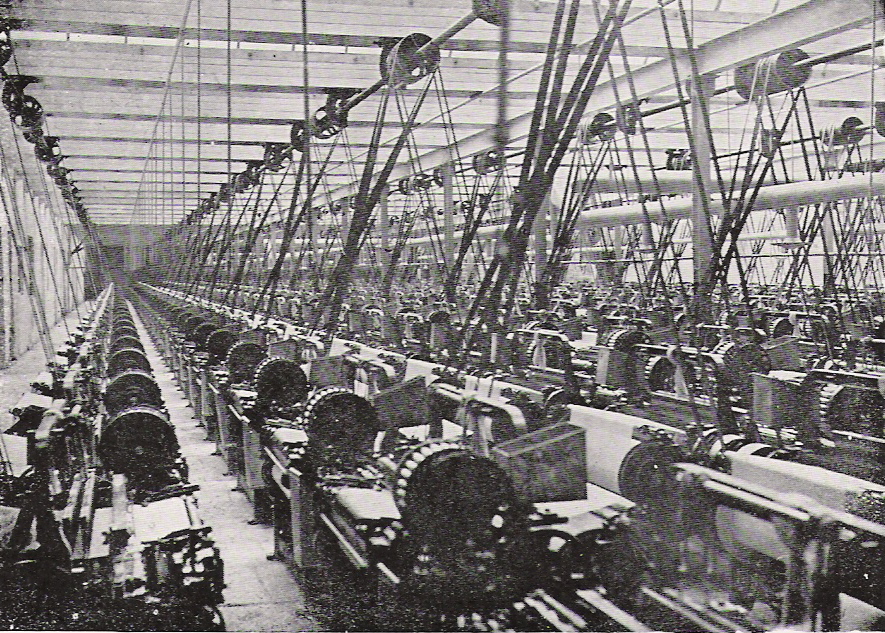
This module was jam-packed full-of information centered around advancements in both technology and slavery. To start off, a video titled Edward Baptist on the Domestic Slave Trade was about the factors that led up to the spike in the domestic slave trade in the United States, such as the “boom” in the demand for cotton. This idea is also explained in a video titled David Macauley: Mill Times PBS Special that was focused on the British migration of Mills to the United States. This had a massive impact on slavery because of the large quantity of cotton needed to make the highly demanded fabric. The southern states of the U.S. defended slavery because of this high margin of profit, their defense is listed quite well in the video titled Dr. David Blight: The South as Slave Society. Back to the British migration of Mills to the United States, many British citizens were fleeing Britain for America in hopes of new opportunities, as cited in Samuel Slater: Hero or Traitor.
Another new advancement of this time period was the National Bank, which was highly opposed by most Americans, as outlined in War against the Bank. Finally, as stated above, this was a period of advancement. The Federal Government invested in new roads, canal systems, and many other forms of travel that led to the creation of steamboats and more structures such as bridges. The U.S. economy was on the rise, thanks to the efforts of the Federal Government. It was surprising the economic impact that the cotton mills had on the United States. The spread of mills, starting in the northeast, caused an impact all over the United States. Though mills were focused in the north, the south gained a large profit from the sale of raw cotton. This also led to the creation of steam-powered technology. It fit well that once mills did not need to be near water, they migrated south due to cheap labor and easier access to row cotton.
 History and development of the US economy by Gianmarco importuna